Rear tire wears first
On a commuting bike the rear tire carries most of the weight and wears out roughly twice as fast as the front. Buying tires in pairs is convenient but often wasteful; rotating a good front tire to the rear is the cheaper habit.
choosing and living with a bicycle for commuting and casual paved-path riding
On a commuting bike the rear tire carries most of the weight and wears out roughly twice as fast as the front. Buying tires in pairs is convenient but often wasteful; rotating a good front tire to the rear is the cheaper habit.
A simple chain wear gauge costs less than a single chain and tells you when to replace one before it damages the cassette. Checking every four to eight weeks is enough for most commuters.
If a new chain skips under load on a familiar gear, the cassette teeth have already worn to match the old chain. At that point the cassette has to go too, which is why the gauge pays for itself.
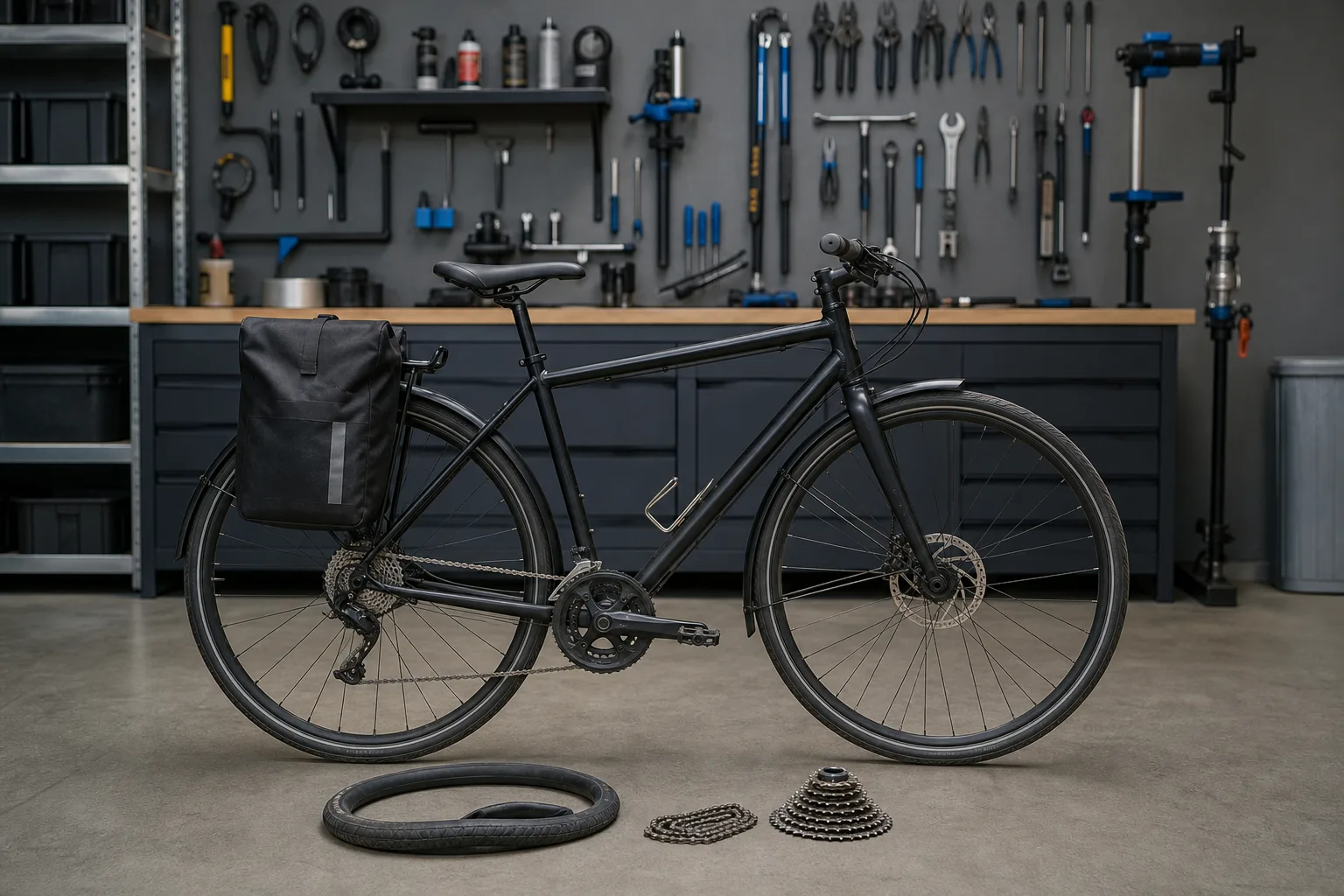
Resin disc pads are quieter and bite well from cold, while metallic pads last longer in wet grit and tolerate heat better. Commuters who ride year round in rain usually end up preferring metallic despite the noise.
The sticker price on a commuter bike is the part everyone argues about, and it is the part that matters least once you are riding five days a week. What decides the real number is the slow drip: rubber, chain, pads, cable housing, and the two or three visits to a shop where somebody who does this for a living puts the bike back into adjustment. None of it is dramatic. All of it is predictable, which means a careful reader can price it before buying rather than after, and can tell the difference between a bike that will be cheap to keep and one that will not.
A commuting tire wears from the center out, and it wears faster than a weekend tire because you ride it in the rain, over glass, and through the grit that collects at intersections. Depending on the compound and how much you weigh with a loaded bag, a rear tire on daily duty tends to need replacing well inside a year, with the front lasting roughly twice as long. Price two of them together, plus tubes or sealant, and you have your single biggest consumable. Puncture-resistant models cost more per tire and usually pay for it back in flats you never fix by the roadside.
A chain stretches as its pins and rollers wear, and once it has stretched past a certain point it starts reshaping the teeth on the cassette and chainring to match. That is the whole economics of drivetrain maintenance in one sentence. Buy a chain wear gauge, check every month or two, and replace the chain when the gauge says so rather than when the shifting gets bad. Do that and a chain is a small, repeated expense across three years. Skip it and you are buying a chain, a cassette, and possibly a chainring at the same time, at several times the cost.
Rim brake pads are among the cheapest parts on the bike and take ten minutes to swap, though on a bike ridden through wet winters they also grind away the rim itself over enough years. Disc pads cost more, last longer in the wet, and come in resin or metallic versions that wear at different rates and make different noises. Cables and housing are the quiet ones: they corrode inside, the shifting gets vague, and most riders assume the derailleur is at fault. A full cable and housing replacement, front and rear, shifting and braking, is inexpensive in parts and mostly a labor charge.
Most shops sell two or three tiers of service, and the names tell you nothing. Ask for the written scope. A basic tune usually means adjustments only: derailleurs, brakes, wheel truing, bearing check, no parts. The next tier up typically adds a drivetrain cleaning and sometimes a hub or headset service. Over three years of year-round commuting, budget for something like one tune per year, with one of those being the bigger version, and expect parts to be billed separately on top of the labor. Call two shops, get both scopes, and compare what is included rather than what is charged.
A commuter bike without a lock, lights, a rack, and fenders is not yet a commuter bike, and the money for those items is part of the purchase whether the listing says so or not. A lock worth trusting in a city costs a real fraction of a modest bike. Lights that run off USB and mount without tools are the item most people replace once after buying cheap. Fenders keep the drivetrain cleaner, which lowers everything discussed above. The Consumer Product Safety Commission is responsible for the federal requirements that cover bicycles and their reflectors, which is why your new bike arrived with reflectors you may want to keep.
Write down the parts list: two tires a year on the rear plus one on the front over three years, two or three chains, one cassette, two sets of pads, one cable and housing job, three tunes. Then call a shop and price that exact list in your own city, because labor rates and parts availability vary more than any published average would suggest. Do it before you buy, and the comparison between two candidate bikes changes shape: proprietary parts, odd tire sizes, and internal cable routing all show up as money.